Focus
- 2025-12-04
- Source: 金风科技
From December 3 to 5, The 22nd World Wind Energy Conference & The 3rd Shantou International Wind Power Technology Innovation Conference were held in Shantou, Guangdong Province. The event was jointly organized by the World Wind Energy Association (WWEA), the Global Wind Energy Council (GWEC), and the Wind Energy Professional Committee of the China Renewable Energy Society. More than 1,000 representatives from over 30 countries across various sectors attended the conference. Goldwind was invited to participate in the event, engaging with global partners to explore pathways for collaborative innovation and value co-creation in the global wind power industry.
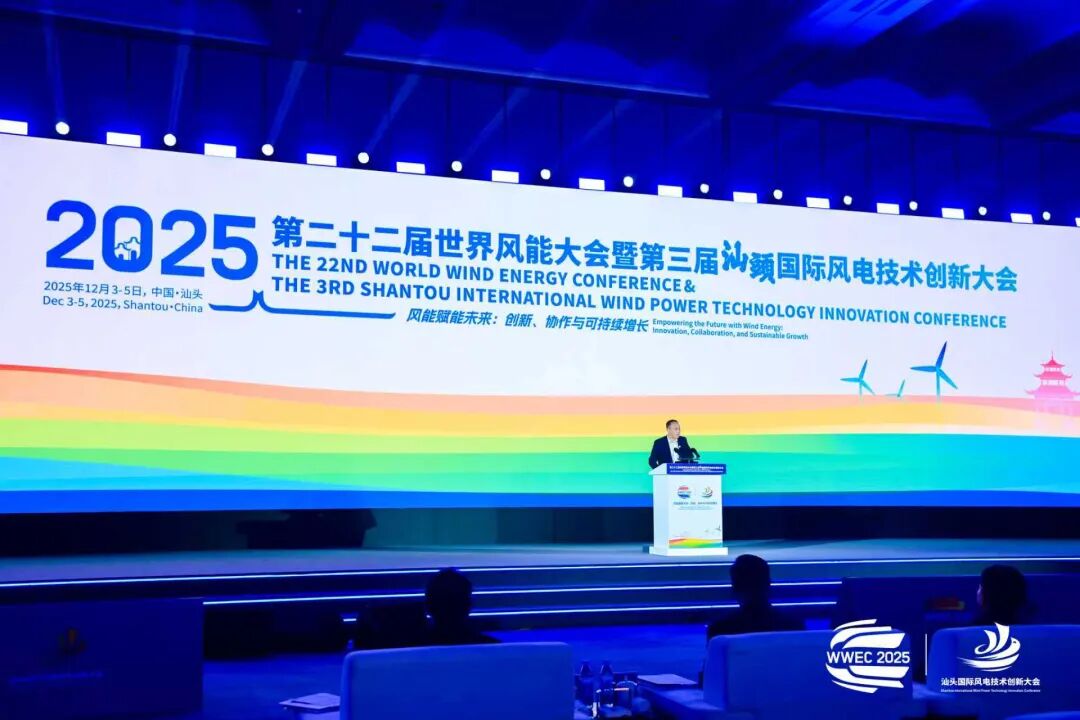
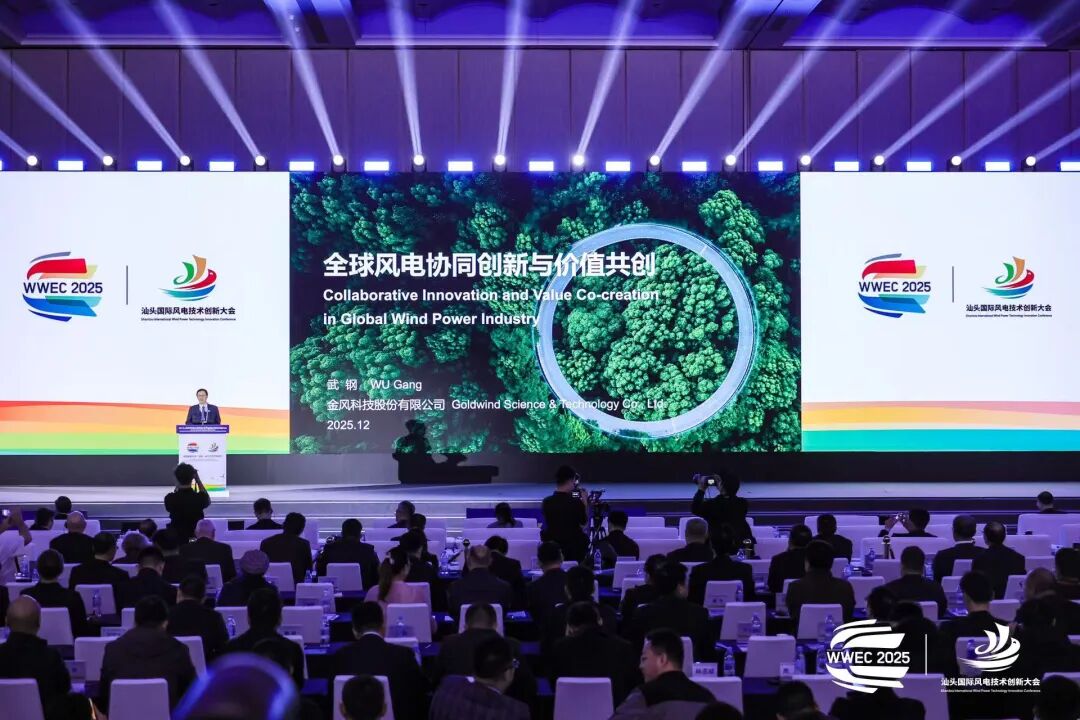
According to projections by the WWEA, wind power now meets approximately 12% of global electricity demand, making it a core pillar of the renewable energy system. Emerging markets such as Central Asia, the Middle East, and South America are witnessing a new wave of large-scale wind power development. At the same time, challenges related to cross-border trade, supply chain resilience, talent development, and standards building are becoming increasingly pronounced. In this context, integrated development has emerged as a key pathway for advancing the wind power industry to the next stage. In his keynote address, Wu Gang, Chairman of Goldwind, noted that 32 years ago, China's total installed wind power capacity stood at only a few hundred thousand kilowatts, whereas today it has surpassed 600 million kilowatts. Such remarkable progress, he emphasized, is attributable not only to the Chinese government's steadfast support for the wind power industry, but also to the strong momentum generated by global industrial integration. Nearly 100 overseas component manufacturers have already established operations in China, growing together with domestic wind power enterprises. Meanwhile, China's wind power industry is actively "going global", accelerating its integration into international markets through a localization-driven approach. For example, Goldwind has established an equipment manufacturing base in Brazil, activating dozens of local supply chain enterprises. This has helped strengthen the local wind power supply chain while enriching the country's new energy ecosystem. At the same time, Goldwind promotes traditional Chinese culture overseas - nearly every Goldwind employee in Brazil has learned Baduanjin, a traditional Chinese fitness practice. It is through such comprehensive integration that the value of green development can be fully realized within global economies and societies.
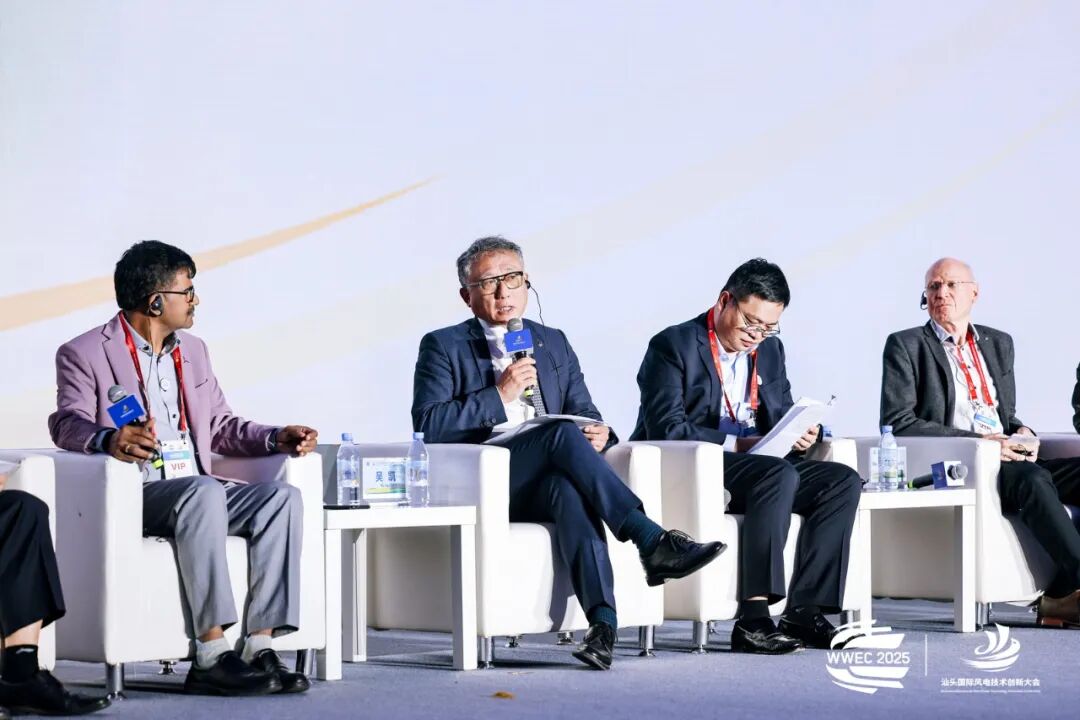
In today's rapidly integrating global wind power industry, the shift from "price competition" to "value competition" is an inevitable path for all participants across the industry value chain. Wu Kai, Vice President of Goldwind, stated that the core competitiveness of wind power companies should go beyond simple price competition and instead focus on three key value pillars: continuous technological innovation, high reliability, and full life-cycle decarbonization. Leveraging the validation advantages of China's vast and diverse market, Goldwind continues to innovate in critical technologies such as large-capacity turbines, enhanced environmental adaptability, and intelligent control systems. From resource assessment to operations and maintenance services, the company is building end-to-end system solutions, actively advancing the integration of wind, solar, and energy storage, strengthening power trading capabilities, and enhancing the overall efficiency and cost-effectiveness of new power systems. Through full life-cycle carbon footprint management and ESG practices, Goldwind further improves the green performance of its operations, evolving from an equipment supplier into a provider and architect of comprehensive system solutions.
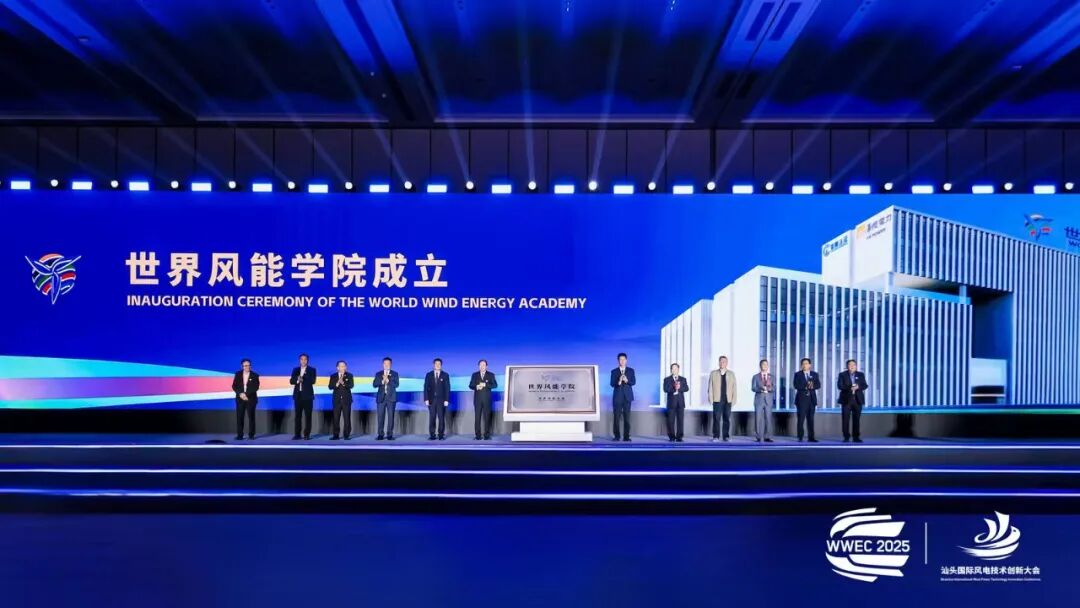
During the conference, the World Wind Energy Academy, jointly established by the WWEA together with industry associations from its member countries and supported by UNESCO, was officially launched at the Shantou International Wind Energy Innovation Port. The Academy's academic team is composed of academicians of the Chinese Academy of Engineering, along with renowned experts from China and abroad. It aims to advance global foundational research in wind energy, tackle key technological challenges, cultivate professional talent, and further strengthen international exchange mechanisms. Wu Gang, Chairman of Goldwind, was invited to serve as Vice President of the World Wind Energy Academy, witnessing another milestone in global wind energy collaboration. In addition, several Goldwind experts participated in nearly 10 parallel forums during the conference, covering topics such as international logistics, hybrid towers, AI-enabled wind power, and deep and far-offshore wind energy. Through these sessions, Goldwind engaged in in-depth exchanges with global partners across specialized fields, sharing insights and expertise.
The conference served as another testament to Shantou's deep-rooted foundation in wind power development. As early as 1988, China's first wind power demonstration project was commissioned on Nan'ao Island, marking Shantou as one of the important birthplaces of the country's wind energy industry. Today, as a new high ground for wind power development, Shantou is attracting a growing concentration of global innovation resources. As a steadfast supporter of Shantou's wind power development, Goldwind actively plays its role as a "chain leader", drawing industrial value chain enterprises in areas such as generators, gearboxes, bearings, and blades to establish operations in the city. Goldwind has also helped advance the Shantou International Wind Energy Innovation Port toward an integrated model encompassing R&D and design, process engineering, manufacturing, and testing and certification, setting a benchmark for integrated development across the wind power industry.
-

Goldwind Official WeChat Account
- 中